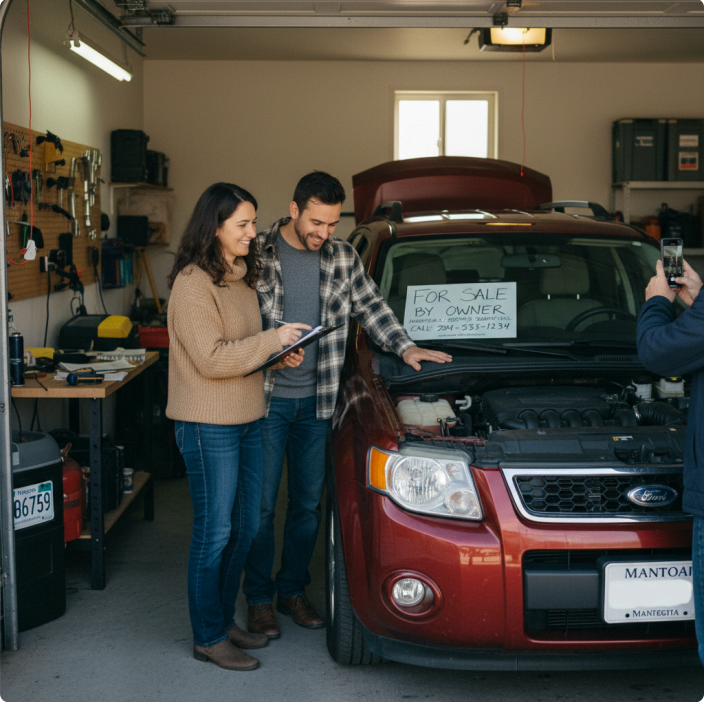
Selling a car privately in Manitoba is a strategic process that involves obtaining a valid
Certificate of Inspection (COI), completing the Transfer of Ownership Document (TOD), and drafting a legally binding Bill of Sale to secure a market value typically 15-25% higher
than a dealer trade-in. While it requires handling the safety inspection and meeting with
potential buyers, the result is a significantly larger financial return that can be applied directly
to your next vehicle or savings. By following provincial regulations and utilizing safe exchange
zones, you can ensure the transaction is both profitable and secure.
Why Selling Privately in Manitoba is Worth
the Effort
Many vehicle owners in Winnipeg and rural Manitoba default to trading their cars in at
dealerships for convenience, often leaving thousands of dollars on the table. The private
market allows you to capture the retail value of your car rather than the wholesale value
offered by dealers.
This extra effort pays off. In Manitoba, the demand for reliable used vehicles is high. By taking
control of the sale, you act as the merchant, allowing you to set the price based on actual
market conditions rather than a dealer’s profit margin requirements. Furthermore,
understanding the local regulations ensures you don’t face legal liabilities down the road.

Quick Summary: The 5 Essential Steps to
Sell Your Car in Manitoba
If you are looking for the fast track to a successful sale, here is the high-level workflow you
need to execute. These five pillars form the backbone of every legitimate private vehicle
transaction in the province.
- Step 1: Get the Safety. Obtain a Certificate of Inspection (COI) from an accredited mechanic.
- Step 2: Gather Paperwork. Locate your TOD and draft a Bill of Sale.
- Step 3: Price & List. Determine market value and list on Kijiji or Facebook Marketplace.
- Step 4: Safe Exchange. Meet buyers in safe zones and accept secure payment.
- Step 5: Finalize. Cancel your Autopac insurance and claim your tax refund if applicable.
Step 1: The Certificate of Inspection (COI)
and Vehicle Condition
In Manitoba, a vehicle cannot be registered by a new owner without a valid Certificate of
Inspection (COI). This document certifies that the vehicle meets the basic safety standards
set by the province. As a seller, providing a fresh COI is the single most effective way to
increase the value and desirability of your car.
While the buyer can take on this responsibility, selling a car with a “fresh safety” signals trust.
It removes the risk for the buyer, allowing you to command a higher asking price. A COI is
valid for one year from the date of inspection, giving you plenty of time to sell.
What a Manitoba Safety Inspection Covers
The inspection is rigorous and ensures the vehicle is roadworthy. Mechanics will examine
critical components such as brakes, tires, suspension, steering, and glass. If you are unsure
about the specifics, reviewing The Ultimate Checklist What A Manitoba Safety Inspection
Covers For Your Used Car is highly recommended to prepare your vehicle beforehand.
Common failures include worn tires (below 3/32 tread depth), cracked windshields in the
driver’s line of sight, and burnt-out signal lights. Fixing minor issues like lightbulbs or wiper
blades before the inspection can save you from a failed result and a re-inspection fee.
Cost Breakdown: Local Mechanics vs. Big Box Shops in
Winnipeg
The cost of a safety inspection is not government-regulated, meaning shops can set their
own labor rates. Generally, the inspection takes 1 to 1.5 hours of labor. Below is a comparison
of what you might expect to pay in the Winnipeg area.
| Service Provider Type | Estimated Cost (CAD) | Pros | Cons |
| Independent Mechanic | $120 – $150 | Personalized service, often faster booking. | Variable waiting room quality. |
| Dealership Service Dept | $160 – $200 | Certified technicians for your brand. | Higher cost, longer wait times. |
| Big Box Auto Shops | $140 – $170 | Convenient locations, standard pricing. | Upselling on parts is common. |
Selling a Car ‘AS IS’: When to Skip the Safety
If your vehicle is older, damaged, or requires repairs that exceed its value, you may choose to
sell it “AS IS”. In this scenario, you must clearly state in the Bill of Sale that the vehicle acts as
“parts only” or requires a safety inspection by the buyer.
When selling “AS IS,” you cannot provide a COI. The buyer will need to tow the vehicle or get
a temporary permit to drive it to a mechanic. This significantly limits your pool of buyers but
is a viable option for getting rid of “beaters” or project cars.
Step 2: Paperwork and Legal Requirements
Documentation is the shield that protects you from post-sale headaches. Manitoba Public
Insurance (MPI) requires specific forms to transfer registration legally. Without these, the
buyer cannot insure the car, and you might remain liable for the vehicle.
It is crucial to have all documents ready before you hand over the keys. Disorganized
paperwork is a major red flag for buyers and can stall a deal instantly. For a broad overview of
necessary items, you can reference What Documents Needed To Buy Used Car Manitoba to
ensure you have the seller’s side covered.
The Transfer of Ownership Document (TOD) Explained
The Transfer of Ownership Document (TOD) is attached to your vehicle registration card. It
is the legal instrument used to sign the car over to the new owner. You must sign the back of
this document and fill in the odometer reading and the date of sale.
Never sign a blank TOD. Always ensure the buyer’s name is filled out to prevent
“curbstoning,” where a middleman resells the car without registering it. For more nuances on
this process, read about Used Car Ownership Transfer Manitoba.
Drafting a Defensible Manitoba Bill of Sale
While the TOD transfers ownership, the Bill of Sale records the transaction details, including
price, date, and conditions. This is your receipt. A proper bill of sale protects you if the buyer
later claims you misrepresented the vehicle.
Your Bill of Sale should include:
- Date of transaction.
- Vehicle Identification Number (VIN).
- Make, Model, and Year.
- Sale Price.
- Signatures of both Buyer and Seller.
- A clause stating the vehicle is sold “as seen” or with specific warranties.
You can find templates and legal specifics regarding a Manitoba Used Vehicle Bill Of Sale
online to ensure yours is watertight.
Proving Clean Title: Using the Personal Property Registry
for Liens
Smart buyers will check for liens against your car. A lien means a lender has a legal claim to
the vehicle because of an unpaid loan. If you sell a car with a lien, the debt follows the car,
not the borrower.
To facilitate a smooth sale, pay off any loans before listing. You can provide a search result
from the Personal Property Registry (PPR) to prove to buyers that the title is clean and free of encumbrances.
Checking the Stolen and Wrecked Vehicle Monitoring
Program
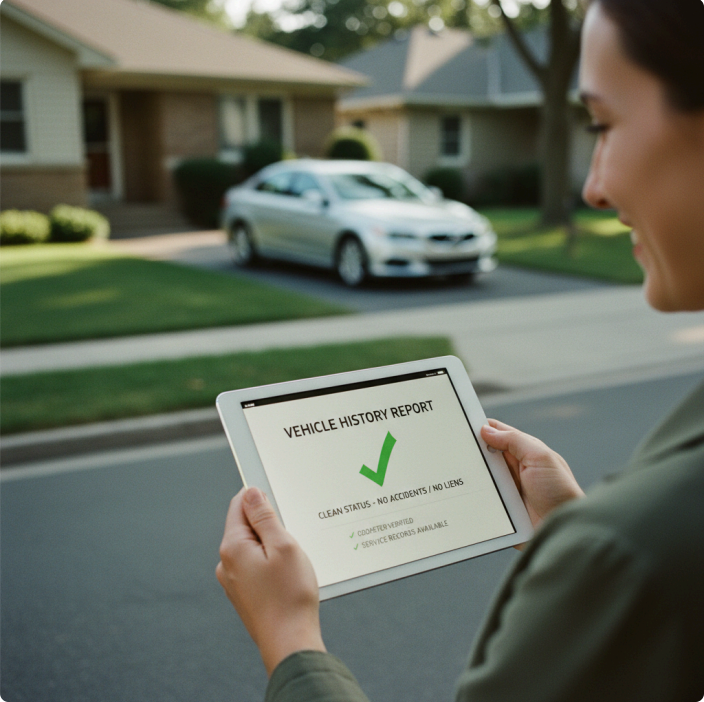
Manitoba has strict laws regarding stolen and wrecked vehicles. Buyers are often advised to
check the Stolen and Wrecked Vehicle Monitoring Program status. As a seller, you should
run this check yourself so you can present the clean status upfront in your listing. This
transparency builds immense credibility.
Step 3: Pricing and Listing Strategy
Pricing your car correctly is the difference between a quick sale and a listing that stagnates
for months. You must detach your emotional value from the car’s market value. Manitoba
buyers are savvy and will compare your listing against dozens of others instantly.
To get a baseline, look at what similar cars are selling for in Winnipeg and surrounding rural
areas. You can research current trends on Used Car Value Manitoba to ensure you aren’t
underpricing your asset.
Determining Accurate Used Car Value in Manitoba
Do not rely solely on “book value.” Local demand dictates price. For example, 4WD trucks and
SUVs command a premium in Manitoba due to our harsh winters, while convertibles may sell
for less in November.
- Check Comparables: Look for the same year, make, and model with similar mileage.
- Factor in Condition: Be honest. Dents, rust, and torn seats lower the value.
- Safety Status: Add $500-$800 to your asking price if you are providing a fresh Safety (COI).
Platform Comparison: Kijiji Autos vs. Facebook
Marketplace Winnipeg
In Manitoba, two platforms dominate the used car market. Understanding the audience on
each helps you tailor your listing.
- Kijiji Autos: This is the traditional go-to for serious buyers. Users here are often specifically looking for vehicles and can filter by safety status and mileage easily.
- Facebook Marketplace: This platform offers high volume and speed. However, you will likely deal with more “Is this available?” auto-messages and low-ball offers.
For a broader perspective on how locals navigate these platforms, you can check discussions
on Reddit regarding selling vehicles in Winnipeg. Additionally, beginners might find value in
the external guide on How to Sell a Car Privately in Manitoba for extra tips on managing
listings.
Step 4: The Safe Exchange and Transaction
The meeting point and payment method are critical safety considerations. Never agree to
meet in a secluded area or late at night. The goal is to make the transaction public and
verifiable.
Designated Safe Exchange Zones (Winnipeg Police
Stations)
The Winnipeg Police Service offers designated “Buy and Sell Exchange Zones” at several
police stations. These areas are under 24-hour video surveillance. Meeting here discourages
scammers and potential thieves.
If you are outside Winnipeg, choose a highly public area with cameras, such as a bank
parking lot or a busy shopping center.
Acceptable Payment Methods to Avoid Fraud
Fraud is a real risk in private sales. Avoid personal cheques or promises of wire transfers.
- Cash: Best for lower-value transactions (under $5,000). Count it carefully.
- Bank Draft / Certified Cheque: Best for higher amounts. Meet at the buyer’s bank to watch them generate the draft to ensure it is not a forgery.
- Interac e-Transfer: Convenient, but verify the funds have actually been deposited into your account before handing over keys. Beware of fake “confirmation emails.”
Step 5: Post-Sale Duties and Financial
Benefits
Once the keys are handed over, your job isn’t quite finished. You need to sever your legal ties
to the vehicle and maximize your financial return.
Cancelling Autopac Insurance and Returning Plates
Remove your license plates immediately. Do not let the buyer drive away with your plates
attached. In Manitoba, the plates belong to you, not the car.
Visit an Autopac agent to cancel your insurance on the sold vehicle. You may be entitled to a
refund on your premium if you paid annually.
The Hidden Benefit: Claiming Your RST Tax Refund on
Replacement Vehicles
This is the most overlooked benefit of private sales. If you buy a new or used vehicle within
six months of selling your old one, you can claim a refund on the Retail Sales Tax (RST) you
paid on the new car.
This works similarly to a trade-in tax credit but is done manually. You must submit a “Buy and
Sell” refund application to the Manitoba Finance Taxation Division. Keep your Bill of Sale from
selling your old car and the purchase invoice for your new car; they are required for this
claim.
Expert Analysis: Dealer Trade-In vs. Private
Sale Calculator
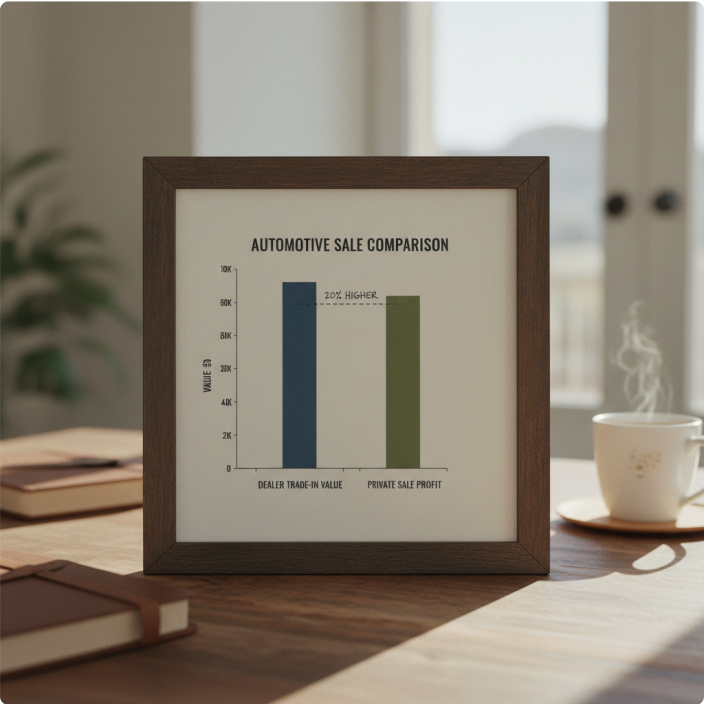
Let’s look at the math. Dealers need to recondition the car and make a profit. Private sellers
keep that margin.
- Scenario: 2018 Honda Civic*
- Dealer Trade-In Offer: $15,000
- Private Market Value: $19,000
- Cost of Safety & Detail: -$250
- Time Invested: 5 Hours
- Net Private Sale Profit: $18,750
- The Result: You earn an extra $3,750* for roughly 5 hours of work. That is an hourly wage of $750/hour. This clearly demonstrates why the private sale route is superior for those willing to put in the effort.
Key Takeaways: The Ultimate Manitoba
Private Sale Checklist
- Clean it up: A detailed car sells faster and for more money.
- Get the Safety: A valid COI is your best negotiation tool.
- Prepare the TOD: Sign only when you have the money.
- Bill of Sale: detailed and signed by both parties.
- Keep your Plates: Never let them go with the buyer.
- Safe Payment: Cash or Bank Draft only.
Conclusion: Finalizing Your Smooth Sale
Selling your car privately in Manitoba is a rewarding financial move that is well within the
reach of most vehicle owners. By strictly adhering to the documentation requirements like the
TOD and Bill of Sale, and prioritizing safety through the COI process and secure exchange
zones, you eliminate the stress typically associated with used car sales.
Take the time to prepare your vehicle, research the market value, and protect yourself with
proper paperwork. The thousands of dollars in extra profit are waiting for you, you just need
to claim them.