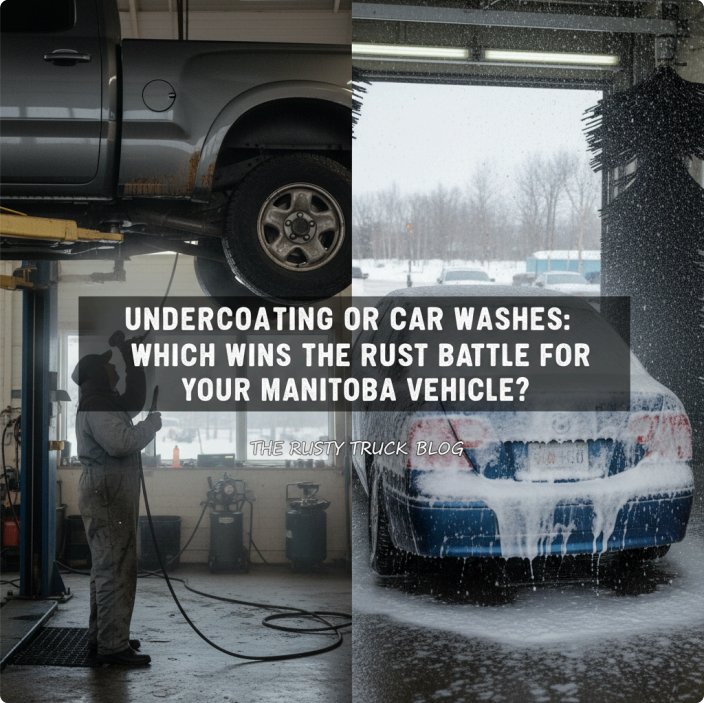
In the battle for rust protection in Manitoba, oil-based undercoating is the clear winner over
car washes alone. While regular washing removes surface dirt, it often fails to neutralize the liquid magnesium chloride used on Winnipeg roads, which penetrates crevices that only a
creeping oil spray can protect. However, the ultimate defense strategy for your vehicle is not
an “either/or” choice but a hybrid approach: applying a high-quality oil-based undercoating
annually and supplementing it with strategic washes during milder weather days.
The Real Cost of Manitoba Winters on Your Undercarriage
Living in Manitoba means accepting that winter is hard on machinery. While we worry about
cold starts and icy roads, the silent killer of our vehicles is the chemical warfare happening
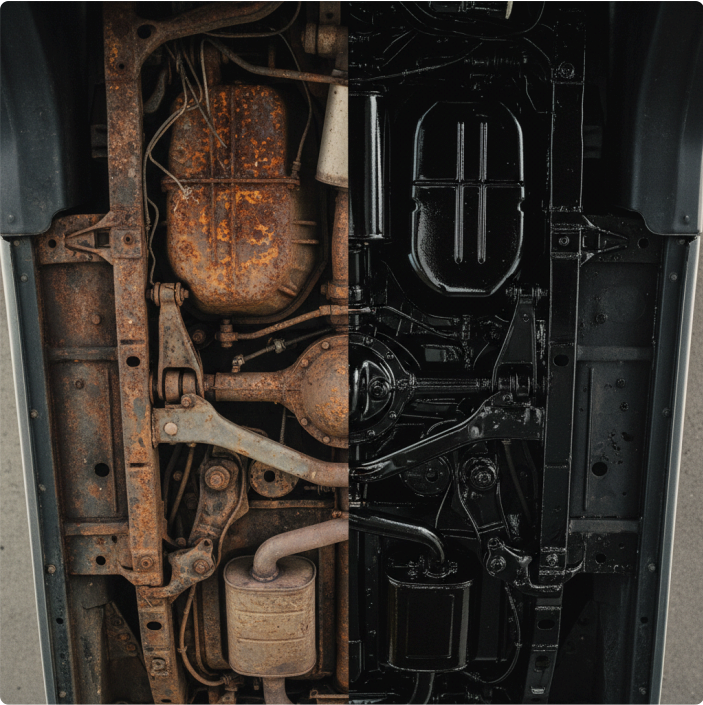
beneath our feet. The combination of moisture, oxygen, and road salts creates an
electrochemical reaction that eats away at steel.
For Winnipeg drivers, this isn’t just about cosmetic rust on the fender; it is about structural
integrity. Ignoring the undercarriage can lead to brake line failure, suspension collapse, and a
vehicle that is unsafe to drive. Understanding the most effective way to combat this corrosion
is essential for protecting your investment.
The Verdict: Undercoating vs. Car Washes
for Manitoba Rust Protection
If you had to choose only one method to protect your car in Winnipeg, undercoating is the
superior choice. A physical and chemical barrier is required to stop the corrosive agents used
by the city from making direct contact with your vehicle’s metal components.
However, relying solely on undercoating while leaving layers of salt on your car for six months
isn’t ideal either. Car washes play a supporting role, but they cannot replace the heavy lifting
done by a professional rust inhibitor.
Summary of Findings: The Hybrid Defense Strategy
The most effective strategy for Manitoba drivers is a Hybrid Defense. This involves:
- Annual Application: Applying an oil-based, drip-style undercoating (like Krown or Fluid
Film) in the late summer or early fall. - Strategic Washing: Washing the vehicle only when temperatures allow the chassis to
dry, or using washes that do not recycle salt-laden water.
This combination ensures that the metal is sealed against oxidation while reducing the overall
salt load on the vehicle’s body.
Why Washing Alone Fails Against Modern
Road Brine
Many drivers believe that a weekly trip to the car wash is enough to keep rust at bay.
Unfortunately, the chemistry of modern road de-icing has changed, rendering water alone
less effective.
Understanding the Enemy: Road Salt, Brine, and Oxidation
in Winnipeg
Rust is iron oxide, formed when iron reacts with oxygen and water. Salt acts as a catalyst,
speeding up this reaction significantly. In the past, cities used rock salt (sodium chloride).
Today, the approach is more aggressive.
Manitoba’s Use of Liquid Magnesium Chloride
To keep roads clear at lower temperatures, Winnipeg and surrounding municipalities often
utilize liquid anti-icing agents, primarily Magnesium Chloride or Calcium Chloride. These
chemicals are effective at melting ice at much lower temperatures than traditional salt.
For a deeper look into how municipalities handle this, you can read about Winter salt
management practices. The downside for your car is that these chemicals are more corrosive
and stickier than rock salt.
How ‘Sticky Salt’ Traps Moisture in Sub-Zero Temps
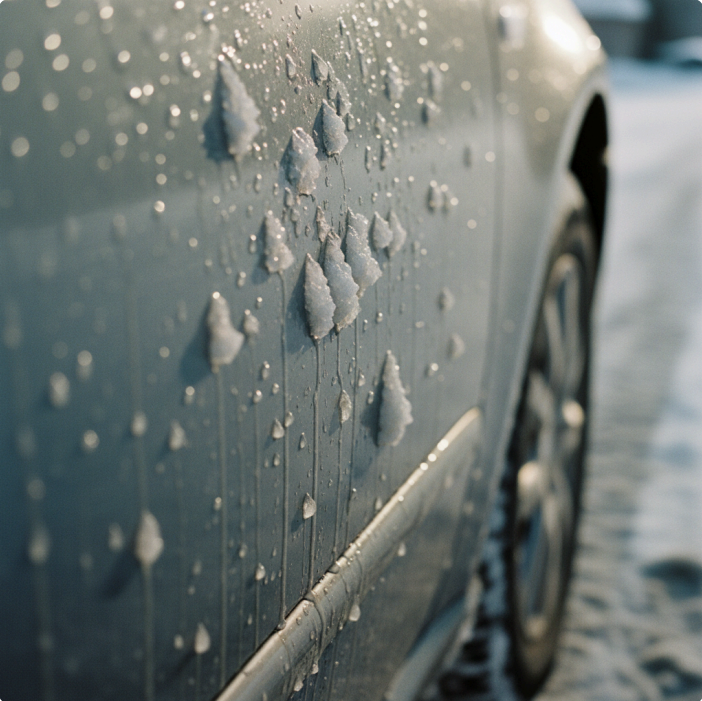
Liquid brine is designed to stick to the road so it doesn’t blow away. Consequently, it also
sticks to your undercarriage. It is hygroscopic, meaning it attracts and holds moisture from
the air even when it appears dry. This creates a perpetual saltwater bath for your car’s frame,
even when the vehicle is parked in a garage.
Impact on Cold Weather Car Problems and Electronics
Corrosion isn’t limited to the frame. The brine mist enters electrical connectors, causing green
“crusties” on wiring harnesses. This leads to phantom electrical issues, sensor failures, and
other Cold Weather Car Problems that can leave you stranded.
Deep Dive: Professional Undercoating
Options in Manitoba
Not all rust proofing is created equal. In Manitoba, the specific product you choose matters
just as much as the application.
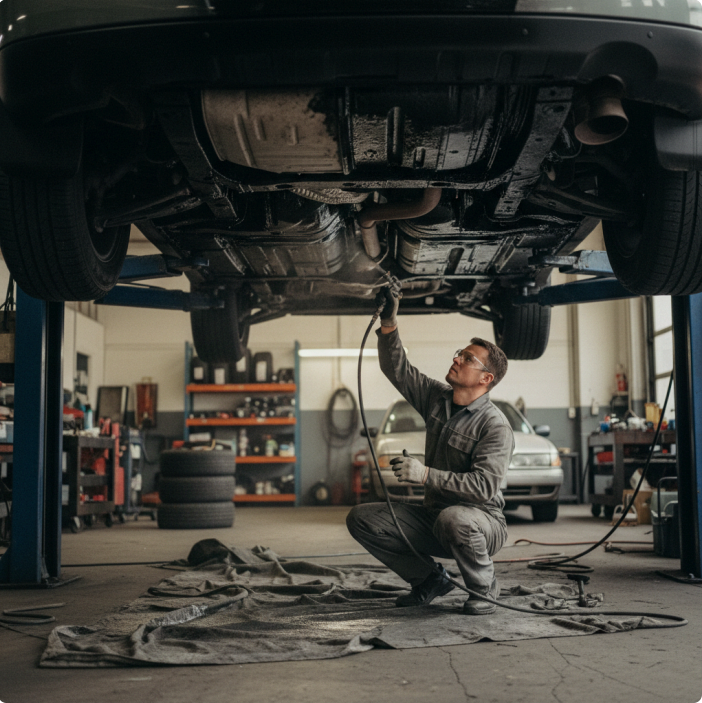
Oil-Based Sprays (Krown, Rust Check, Fluid Film): The
Gold Standard?
For the prairie climate, oil-based sprays are widely considered the gold standard. These
products are designed to “creep.” When applied, the oil actively spreads into pinch welds,
door seams, and inside frame rails.
- Pros: Self-healing (if scratched, it flows back over), penetrates deep crevices, lubricates suspension parts.
- Cons: Needs annual re-application, can drip on driveways for a few days.
Rubberized vs. Dripless Wax Coatings: Pros and Cons
Rubberized coatings look great initially because they are black and uniform. However, they
are often dangerous for older vehicles.
- The Trap: If the rubber coating cracks (which it will due to stone chips), moisture and salt enter the crack. The coating then traps the salt against the metal, accelerating rot unseen.
- Dripless Wax: A middle ground. It is cleaner than oil but doesn’t creep as well. It is better for new cars but less effective for used ones with existing surface rust.
Dealer Rust Proofing Packages: Are They Worth the High
Cost?
Many dealerships offer electronic rust modules or expensive one-time coatings. Electronic
modules generally do not work on cars because cars are not grounded in water (unlike
boats). Dealer coatings are often overpriced compared to aftermarket specialists.
If you are looking for a vehicle that is already in great shape, Check out our Inventory. We
ensure our vehicles meet high standards before sale.
DIY Fluid Film Rust Prevention: A Viable Alternative?
For the hands-on owner, buying cans of Fluid Film or Surface Shield is a viable option for spot
treatment. It is excellent for touching up wheel wells and trailer hitches. However, without a
hoist and compression sprayer, it is difficult to reach deep inside the chassis rails where rot
starts.
Deep Dive: The Role of Car Washes in Rust
Prevention
Car washes are not the enemy, but they must be used correctly to be effective in Winnipeg.
Do Car Washes Help Prevent Rust on Manitoba Vehicles?
Yes, by physically removing the salt bulk. However, high-pressure water can sometimes force
brine deeper into seals and weatherstripping if not careful.
The Risk of Recycled Water and Salt Content
This is a critical factor. Many car washes recycle their water to be environmentally friendly. In
February in Winnipeg, that recycled water is incredibly salty. Washing your car with salty
water is counter-productive unless the final rinse uses fresh water.
When to Wash: Managing Moisture Seepage in Freezing
Temps
Washing your car when it is -30°C is risky. The water can freeze door latches and seals shut. It
is best to wash your car on “mild” days (around -10°C or warmer) and wipe down door jambs
immediately.
Head-to-Head Comparison: Data
Breakdown
Let’s look at the numbers to see which method provides better value and protection.
Cost-Benefit Analysis: Annual Spray vs. Weekly Premium
Wash
- Annual Undercoating: Approx. $130 – $160 per year.
- Weekly Premium Wash: $15/week x 20 winter weeks = $300.
Undercoating is roughly half the price of a diligent washing routine and offers significantly
higher protection.
Longevity Estimates for Manitoba Vehicles
- Untreated Vehicle: Visible rust often appears within 3-5 years; structural issues by year 8-10.
- Annually Undercoated Vehicle: Can remain virtually rust-free for 15+ years.
Comparison Table: Protection Levels by Method
| Method | Protection Level | Cost Profile | Main Benefit | Main Drawback |
| Oil-Based Undercoating | High (Best) | $150/year | Creeps into seams; neutralizes salt | Messy; requires annual visit |
| Rubberized Coating | Low to Medium | $500+ (One time) | Looks clean; sound dampening | Traps moisture; accelerates rot |
| Weekly Car Wash | Low | $300+/winter | Removes visible dirt | Cannot reach internal cavities |
| Electronic Module | None | $500+ | High profit for seller | Scientifically ineffective on cars |
| Hybrid (Oil + Wash) | Maximum | $400/year | Comprehensive defense | Highest cost and effort |
Expert Analysis: Rust and the Manitoba
Safety Inspection Checklist
Rust is not just an aesthetic issue; it is a legal one. When you buy or sell a car, it must pass a
safety inspection.
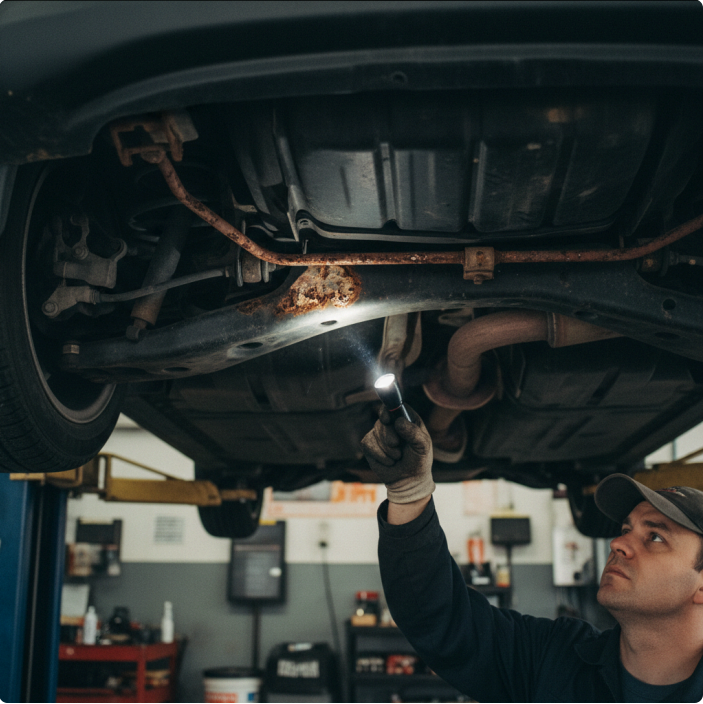
Why Structural Rust Fails a Manitoba Safety Inspection
The province has strict guidelines. Perforation (holes) in the floorboards, rocker panels, or
frame rails will cause a vehicle to fail. To understand the specifics, review the Manitoba
Safety Inspection Checklist.
Protecting Brake Lines and Suspension Components
Brake lines are steel. When they rust, they burst, causing total brake failure. Suspension
control arms can also snap if weakened by corrosion. These are automatic failures. For more
details on what inspectors look for, read about What Fails Manitoba Safety Inspection.
If your vehicle needs attention due to corrosion damage, our Winnipeg, MB Vehicle Service
& Repair team can assess the safety of your undercarriage.
Resale Value: Rust-Free vs. Corrosion Issues
A 10-year-old truck in Manitoba with a pristine frame (thanks to undercoating) can sell for
thousands more than the same truck with rusted wheel arches. If your current vehicle is losing
the battle, it might be time to upgrade. We offer Car Financing Available in Winnipeg to
help you get into a newer, cleaner vehicle.
Key Takeaways: Best Practices for Manitoba
Drivers
To truly win against rust, you need a plan.
Recommended Schedule: When to Undercoat and When
to Wash
- August-October: Apply your oil-based undercoating. The weather is warm, allowing the
oil to creep deep into the metal pores. - Winter: Wash only on mild days. Focus on the undercarriage spray.
- Spring: Perform a thorough chassis bath to remove all winter buildup.
Winter Driving Tips to Minimize Salt Exposure
Avoid driving through deep slush puddles near the curb, as this is where the highest
concentration of brine accumulates. For more advice on navigating the season, check our guide on Winter Driving Manitoba.
External experts agree that consistency is key. You can read more about Winning the war on
rust to see how other local professionals approach the problem.
Frequently Asked Questions (FAQ) on
Manitoba Rust Control
Here are answers to common questions regarding vehicle preservation in our climate.
How often should you undercoat your car in Manitoba?
You should undercoat your vehicle once every 12 months. Oil-based sprays wash off over
time due to road spray and rain, so annual re-application is vital to maintain the barrier.
Is undercoating worth it for older vehicles?
Yes. While you cannot reverse existing rust, applying oil-based undercoating slows down the
progression significantly by starving the rust of oxygen. It can extend the life of an older
beater by several years.
Can car wash chemicals damage undercoating?
Most standard car wash soaps are safe. However, high-pressure undercarriage sprays can
strip away some of the oil coating if used too aggressively or too frequently. This is why the
hybrid method balances protection with cleanliness.
Protecting Your Investment in Winnipeg
The debate between undercoating and car washes is settled: Undercoating is the essential
shield, while car washing is the maintenance step. By utilizing specialized oil sprays that
fight the specific chemical profile of Winnipeg’s road brine, you ensure your vehicle remains
safe, passes inspection, and holds its value. Don’t let the winter win, coat your car and drive
with confidence.