When the Dashboard Lights Up on Portage
Avenue
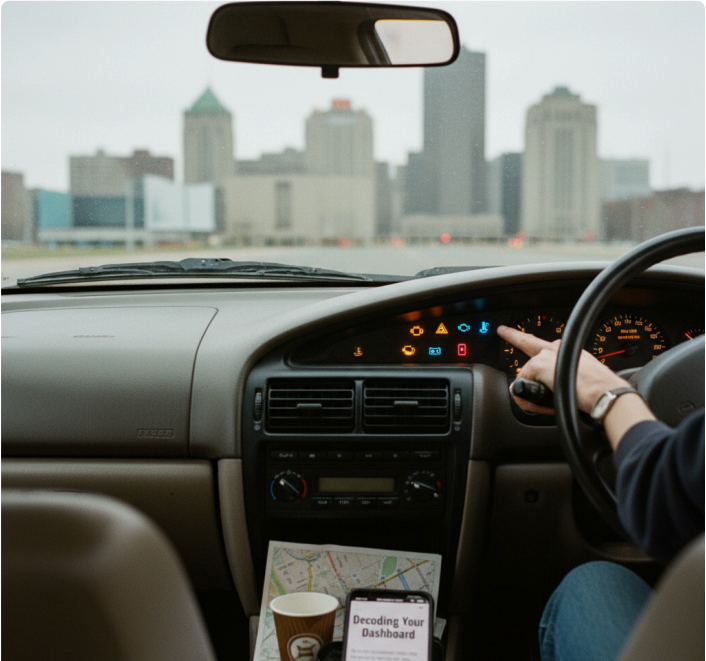
Dashboard warning lights are your vehicle’s primary communication tool, utilizing a color-coded system of symbols to alert drivers to mechanical faults, safety system engagements, or
maintenance needs. When a symbol illuminates on your dash while navigating stop-and-go
traffic on Portage Avenue or cruising down the Perimeter Highway, it indicates a specific
status change within your car’s On-Board Diagnostics (OBD) system. Understanding these
signals immediately is crucial for vehicle longevity and passenger safety.
Seeing a warning light pop up during a rush hour commute can be stressful. Whether it is a
subtle glow or a flashing red alert, these lights act as the nervous system of your car. While
some indicators are simply friendly reminders, others signal catastrophic failure that requires
you to pull over immediately. This guide breaks down exactly what your car is trying to tell
you, filtered through the lens of Manitoba’s unique driving conditions.
The Traffic Light System (Red, Yellow,
Green)
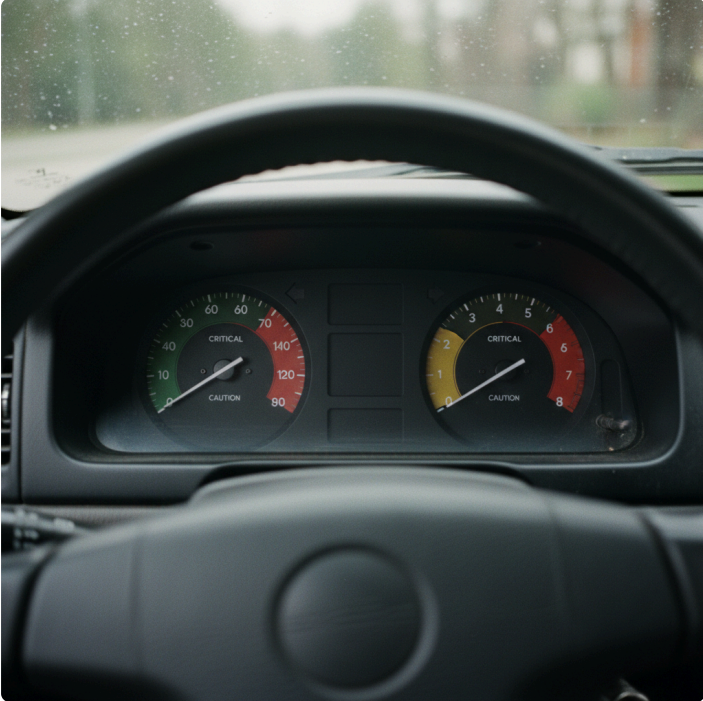
The most efficient way to interpret dashboard symbols is by following the universal “Traffic
Light” logic. Manufacturers design these clusters to be intuitive, allowing you to gauge the
severity of an issue in milliseconds without needing to consult a manual immediately.
Red Lights: Stop Safely and Shut Off Engine Immediately
- Red means stop.* If a red symbol appears (such as an oil can, battery, or thermometer), it indicates a critical system failure or a severe safety risk. Continuing to drive with a red warning light can result in permanent engine damage or an accident. You must pull over to a safe location, turn off the engine, and call for roadside assistance or professional help.
Yellow Lights: Proceed with Caution and Plan Service Soon
- Yellow (or amber) means caution.* These lights, such as the Check Engine Light or ABS warning, indicate that a component needs attention or a system has been disabled. You can usually continue driving your vehicle, but you should not ignore the issue. Schedule a diagnostic appointment promptly to prevent the problem from escalating into a red-light situation.
Green or Blue Lights: Systems Active (No Danger)
- Green or blue means go.* These symbols are informational. They confirm that a specific system is currently active, such as your high beams, daytime running lights, or cruise control. No action is required other than operating the vehicle normally.
Why Winnipeg Winters Trigger Warning
Lights
Manitoba’s extreme climate is a stress test for every automotive component. The fluctuation
between a heated garage and the -30°C outdoors can trigger sensors that would otherwise
remain silent in milder climates. Understanding these environmental triggers can help you distinguish between a mechanical failure and a cold-weather quirk. For a broader look at
seasonal care, you can read about cold weather car maintenance and how to prevent
common winter problems.
The -30°C Impact on TPMS Sensors and Tire Pressure
The Tire Pressure Monitoring System (TPMS) light, usually an exclamation point inside a
horseshoe shape, is the most common winter warning in Winnipeg. Physics dictates that for
every 10°C drop in temperature, tire pressure decreases by approximately 1 PSI. When a cold
snap hits, your tires may drop below the sensor’s threshold, triggering the light even if there
is no puncture. To understand the science behind this, you can learn why your tire pressure
light comes on when it’s cold. Always verify with a manual gauge before assuming it is just
the cold.
Battery Voltage Drops and False Alternator Alerts
Batteries lose a significant portion of their cranking amps in freezing temperatures. This drop
in voltage can sometimes confuse the vehicle’s computer, momentarily triggering a battery
warning light upon startup. If the light persists after the car has warmed up, however, it
points to a charging system failure rather than just the weather.
The ‘Snowflake’ Icon: Icy Road Warnings Explained
Many modern vehicles display a snowflake symbol or an “Ice Possible” text alert when the
ambient temperature drops to 4°C or below. This is not a mechanical fault; it is an
environmental warning. It serves as a reminder that bridges (like the Disraeli or Chief Peguis)
may be icing over before the rest of the road surfaces.
Diesel Exhaust Fluid (DEF) and Block Heater Cord Faults
For diesel truck owners in Manitoba, DEF heaters can fail in extreme cold, triggering
countdown warnings that eventually prevent the engine from starting. Additionally, although
not always connected to a specific dashboard light, a damaged block heater cord can lead to
a “crank, no start” condition that mimics more serious engine trouble codes.
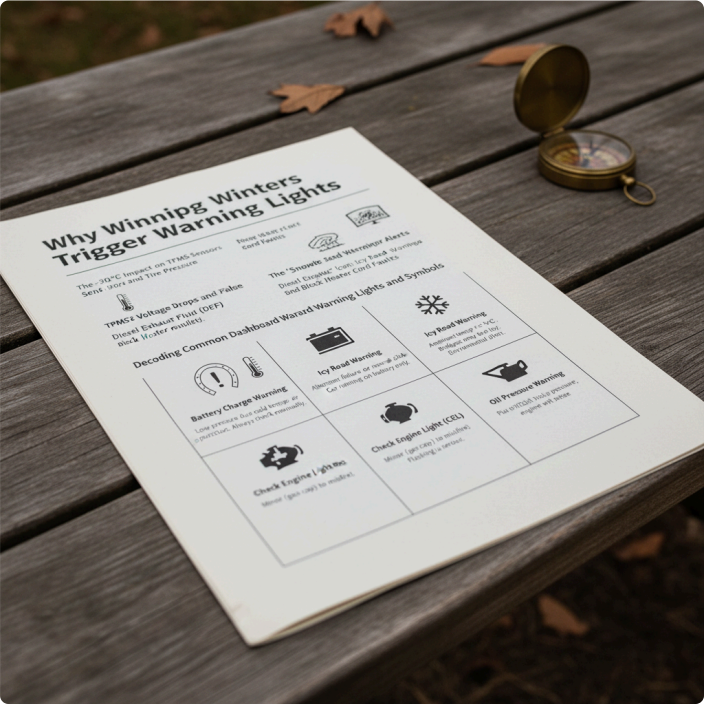
Decoding Common Dashboard Warning
Lights and Symbols
To properly maintain your vehicle, you need to recognize the specific icons that appear. If you
are unsure about a symbol not listed here, many resources exist for identifying car warning
lights, symbols and meaning. Below are the most frequent offenders found on Winnipeg
roads.
Why Is My Check Engine Light On? (Loose Gas Cap vs.
Engine Misfire)
The Check Engine Light (CEL) is the most ambiguous signal. A solid amber light often
indicates an emissions issue, which could be as minor as a loose gas cap or a faulty oxygen
sensor. However, it can also indicate a vacuum leak or failing spark plugs. If the light is
flashing, it indicates a severe engine misfire that is actively dumping raw fuel into the exhaust,
which will destroy your catalytic converter.
Oil Pressure Warning: The Most Critical Alert to Heed
The “Oil Can” symbol is the most dangerous light on the dash. It means your engine has lost
oil pressure. Without pressure, metal parts grind against metal parts, seizing the engine in
seconds. If this light illuminates, pull over immediately. Do not try to limp the car home.
Battery Charge Warning: Identifying Alternator Failure vs.
Cold Snap
This red battery symbol indicates that the vehicle is running solely on battery power and the
alternator is not charging it. Once the battery drains (which happens faster in winter with
heaters and headlights on), the car will die. If you need professional assistance to diagnose
this, reliable Winnipeg, MB Vehicle Service & Repair is essential to avoid being stranded.
Airbag Warning Light Meaning: Impact on Manitoba
Safety Inspections
The SRS (Supplemental Restraint System) light indicates a fault in the airbag system or
seatbelt tensioners. While the car will still drive, the airbags will not deploy in an accident.
Crucially, a vehicle cannot pass a provincial inspection with this light on. If you are looking at
Manitoba safety inspection used car Archives, you will note that SRS faults are automatic
failures.
ABS and Traction Control Light: Winter Driving
Implications
In Winnipeg, these lights often flicker when you lose grip on icy intersections. However, if the
ABS light stays on solidly, the anti-lock system is disabled. Your brakes will still work, but you
will not have anti-lock assistance during a skid—a dangerous proposition on the Perimeter
Highway in January.
Coolant Temperature Warning: Overheating Risks in All
Seasons
While we associate overheating with summer, a stuck thermostat or a frozen radiator in
winter can also cause this red thermometer light to trip. Overheating can warp cylinder heads
rapidly. Treat this with the same urgency as the oil pressure light.
What To Do When Car Warning Light
Comes On?
Panic is not a strategy. Having a clear plan saves you money and protects your vehicle.
Immediate Triage Steps for Winnipeg Drivers
- Check the Color: Red? Pull over. Yellow? Listen and feel for changes in drivability.
- Check the Gauges: Look at your temperature and oil pressure gauges (if equipped) to
verify the warning light. - Secure the Environment: If you are on a busy Winnipeg route, signal clearly and move
to a shoulder or parking lot. Do not stop in a live lane unless the engine dies.
Steady vs. Flashing Lights: Knowing the Difference
- Steady Light: A fault has been detected. It is a problem, but usually not an immediate catastrophe (unless it is red).
- Flashing Light: This indicates an active, severe failure occurring right now. A flashing Check Engine Light means you are damaging the engine with every revolution.
When to Use a DIY OBD2 Scanner vs. Professional
Diagnosis
Basic OBD2 scanners are affordable and can give you the “P-Code” (e.g., P0300). This helps
you research the issue. However, a code tells you what happened, not why. Professional
diagnostics are required to trace electrical faults or vacuum leaks. Ignoring these issues
increases The True Cost Of Used Car Ownership In Winnipeg Beyond The Sticker Price, as
minor repairs often spiral into major overhauls.
Quick Reference Severity Table
Use this chart to quickly identify the urgency of common dashboard symbols.
| Symbol | Name | Color Priority | Immediate Action |
| Oil Can | Oil Pressure | RED (Critical) | Stop engine immediately. Do not drive. |
| Thermometer | Coolant Temp | RED (Critical) | Stop engine. Allow to cool. Check fluid. |
| Battery | Charging System | RED (Critical) | Turn off non-essentials. Drive to repair shop immediately. |
| Engine | Check Engine | Yellow (Caution) | Check gas cap. Schedule service. (Stop if flashing). |
| ABS | Anti-Lock Brake | Yellow (Caution) | Drive with care. Brake normally (no anti-lock). |
| Exclamation (!) | TPMS | Yellow (Caution) | Check tire pressure. Inflate to spec. |
Maintaining Your Vehicle Beyond the
Warning Lights
Proactive maintenance is the only way to keep the dashboard dark. In a market where
vehicles face harsh conditions, care affects value.
The Role of Regular Service in Preventing Winter Alerts
Routine oil changes, battery testing in October, and checking fluid levels can prevent 90% of
red warning lights. Whether you drive a sedan or a truck, consistent care is vital. If you are
looking to upgrade to a more reliable vehicle, browsing High Quality Used Cars that have
been inspected can save you future headaches.
How Active Warning Lights Affect Used Car Trade-In Value
in Winnipeg
A “Christmas tree” dashboard destroys trade-in value. Dealerships view active warning lights
as unknown financial risks. Before trading in, scan the codes. If the repairs are minor, fix them. If you are buying, be wary of sellers who claim “it’s just a sensor.” Always refer to the Pre-purchase inspection used car Manitoba Archives to ensure you aren’t inheriting someone
else’s repair bill.
The Importance of Pre-Purchase Inspections for Hidden
Codes
Unscrupulous sellers may clear codes just before a test drive. A proper pre-purchase
inspection will reveal “Not Ready” monitors, indicating codes were recently wiped. This is a
crucial step in The Ultimate Canadian Used Car Buyer’s Checklist: Navigating Manitoba
Regulations. Furthermore, understanding your rights regarding defects is essential; familiarize
yourself with the Used car warranty laws Manitoba Archives to know where you stand if lights
pop up shortly after purchase.
Driving with Confidence on Manitoba
Roads
Understanding your vehicle’s warning lights transforms fear into action. By respecting the red
lights, investigating the yellow ones, and maintaining your vehicle for the Winnipeg climate,
you ensure safer travels for you and your family.
If your current vehicle is lighting up too often and repairs are outweighing the value, it might
be time to look for a replacement. With Car Financing Available for various credit situations,
you can transition into a safer ride. Don’t wait for a breakdown in -40°C weather; Test Drive a
Vehicle today that gives you the green light for peace of mind.