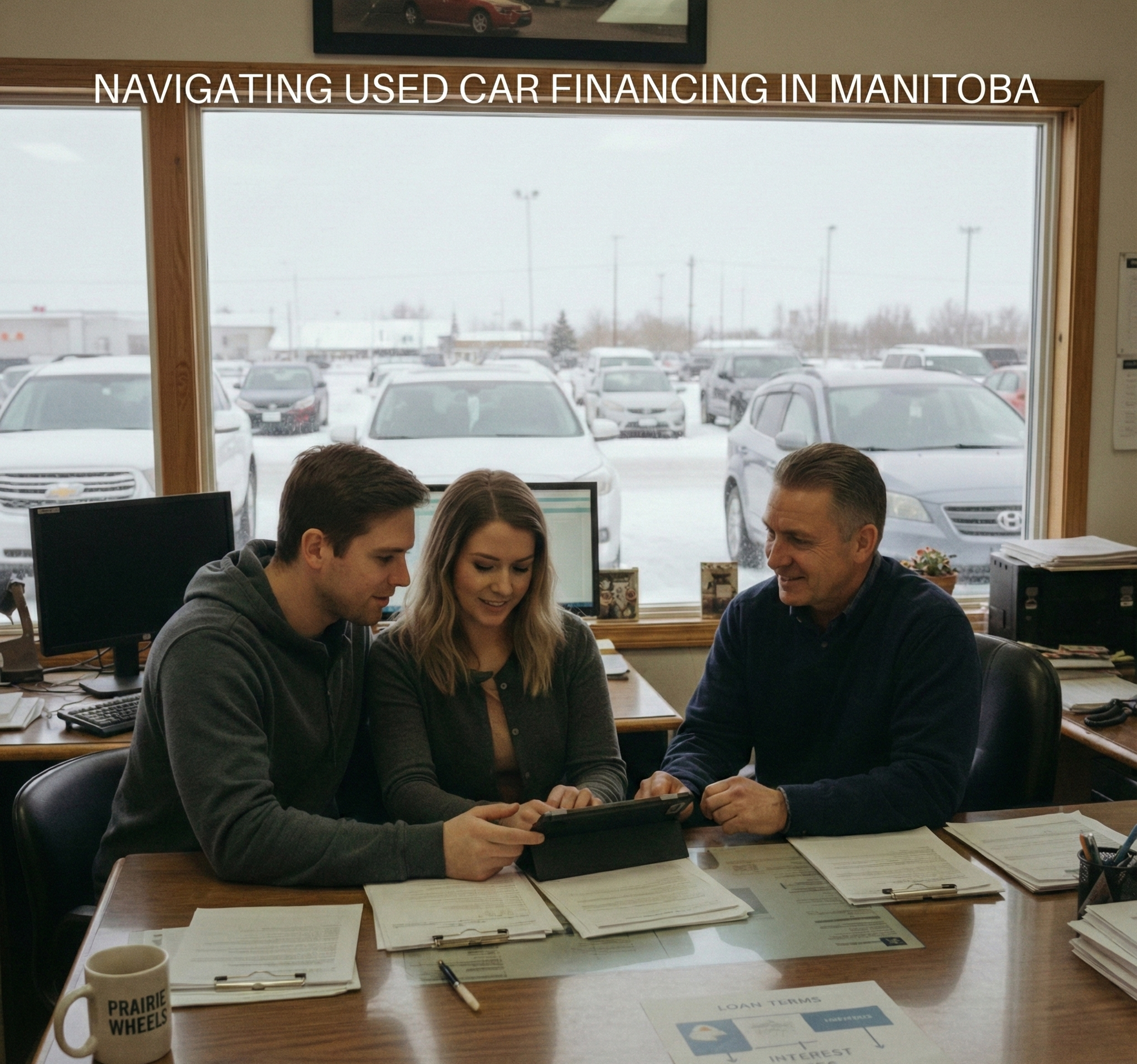
- Used car financing in Manitoba is the process of securing a loan, typically through a dealership, bank, or credit union, to cover the purchase price of a pre-owned vehicle, which is then repaid with interest over a fixed term. To successfully navigate this process in Winnipeg and rural Manitoba, buyers must understand their credit score, provide proof of income, and ensure the vehicle has a valid Certificate of Inspection (COI). Unlike a simple cash transaction, financing requires navigating specific regulations under the Manitoba Consumer Protection Act to ensure transparency and affordability.
Quick Summary: How to Get a Used Car
Loan in Manitoba (The Direct Answer)
If you are looking for the fastest route to getting behind the wheel, here is the condensed
roadmap for Manitoba buyers:
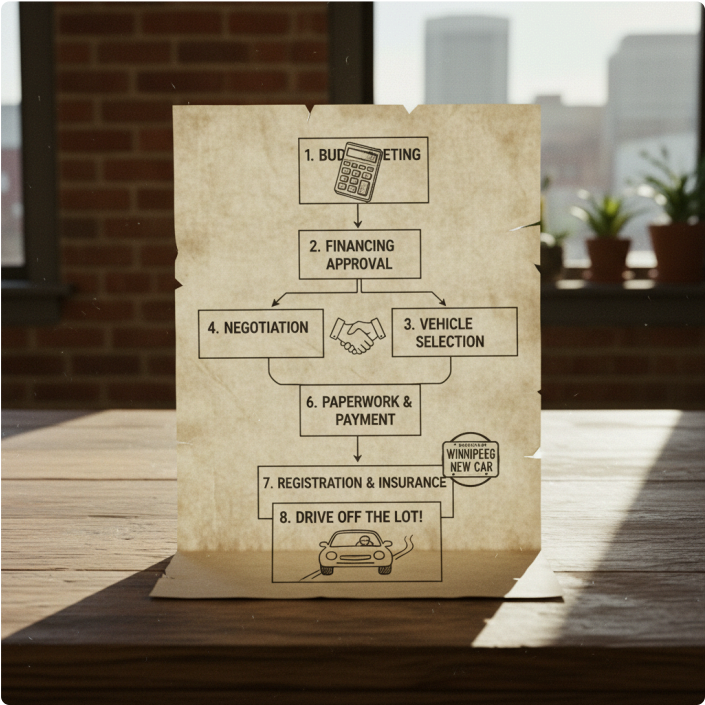
- Assess Affordability: Calculate your budget, factoring in high interest rates and insurance.
- Check Your Credit: Know your score before you walk into a dealership.
- Get Pre-Approved: Apply online with dealerships or brokers to lock in a rate.
- Select a Certified Vehicle: Ensure the car has a passed COI (Certificate of Inspection).
- Finalize Paperwork: Sign the Bill of Sale and Transfer of Ownership Document (TOD).
- Register with MPI: Take your documents to an Autopac agent to get plates and insurance.
The 5 Critical Steps to Approval in
Winnipeg and Rural MB
Securing approval for a vehicle in Manitoba is straightforward if you follow a structured
approach. Whether you are in downtown Winnipeg or outside the Perimeter in rural communities, the fundamental criteria for approval remain consistent: capacity to pay, credit
history, and vehicle value.
The landscape has changed in 2025. Lenders are more rigorous regarding income verification,
but there are also more options available for non-prime borrowers. Following these five steps
will help you avoid rejection and secure the best possible terms.
Data Breakdown: Typical Interest Rates and
Terms for 2025
Before diving into the steps, it is vital to understand what a “good” deal looks like in the
current economic climate. Interest rates fluctuate based on the Bank of Canada’s prime rate
and your individual credit risk.
Below is a breakdown of typical rates you might encounter in Manitoba for used vehicle
financing this year:
| Credit Tier | Credit Score Range | Est. Interest Rate (APR) | Typical Loan Term |
| Prime | 720 – 850 | 6.99% – 8.99% | 48 – 72 Months |
| Standard | 660 – 719 | 8.99% – 11.99% | 60 – 84 Months |
| Non-Prime | 600 – 659 | 10.99% – 16.99% | 48 – 72 Months |
| Subprime | 300 – 599 | 17.99% – 29.99% | 36 – 60 Months |
Step 1: Analyzing Your Budget and The True
Cost of Ownership
Many buyers make the mistake of focusing solely on the monthly payment. However, the
sticker price is just the tip of the iceberg. In Manitoba, the true cost of ownership includes
distinct local variables that can impact your wallet significantly.
Using a Payment Calculator to Determine Affordability
Before falling in love with a specific truck or sedan, you must run the numbers. A general rule
of thumb is that your car payment should not exceed 15-20% of your take-home pay.
To get an accurate estimate of what your monthly or bi-weekly obligation will look like, you
should utilize a Payment Calculator. This tool allows you to input the interest rate and term
length to see if the financing aligns with your monthly cash flow.
Factoring in Insurance, Fuel, and Manitoba Winter
Maintenance
Living in Manitoba means dealing with extreme weather, which directly affects vehicle costs.
You must account for:
- MPI Premiums: Manitoba Public Insurance rates vary based on your driving record and where you live (Winnipeg vs. Rural).
- Winter Tires: A necessity, not a luxury. Budget $800-$1,200 every few years.
- Fuel Consumption: Remote car starters and winter idling increase fuel consumption.
For a deeper dive into these hidden expenses, read about The True Cost of Used Car
Ownership in Winnipeg: Beyond the Sticker Price.
Step 2: Understanding Credit Requirements
in Manitoba
Your credit score is the gatekeeper to favorable financing terms. Lenders in Manitoba use this
three-digit number to determine the risk of lending to you.
What Credit Score is Needed for a Used Car Loan in
Manitoba?
Generally, a score above 660 allows you to access standard interest rates through major
banks. A score above 720 unlocks “Prime” rates, which are the lowest available. However, you
can still get approved with lower scores; you will simply face higher interest rates to offset the
lender’s risk.
For a broader perspective on approval criteria, you can review external resources on How to
Get Approved for Vehicle Financing in Manitoba.
Used Car Financing Options for Bad Credit or No Credit
History
If your score is below 600, or if you are a newcomer to Canada with no credit history, you are
not out of luck. Many dealerships specialize in “subprime” financing. They look beyond the
score to your income stability and debt-to-income ratio.
To explore specific options for difficult credit situations, check out Car Financing Available In
Winnipeg, MB – Hiru Auto. These programs focus on your ability to pay today rather than
your financial history from years ago.

Step 3: Comparing Lenders (Dealerships vs.
Banks vs. Private)
Where you get your loan is just as important as the car you buy. In Manitoba, you primarily
have three options: dealership financing, direct bank loans, or third-party brokers.
Why Dealership Used Car Financing Offers Streamlined
Approval
Dealerships are often the most convenient option because they handle the vehicle sale and
the financing in one transaction. They have relationships with multiple lenders, allowing them
to “shop” your application to find the best rate.
If you are looking for reputable places to start your search, consider reviewing Unveiling
Winnipeg’s Top 7 Used Car Dealerships: Your Ultimate 2025 Guide.
The Role of Third-Party Brokers like Epic Financial
For buyers with unique financial situations, third-party brokers can be a lifesaver. Companies
like Epic Financial specialize in connecting borrowers with lenders that traditional banks
might overlook.
Financing with Epic Financial can be particularly beneficial if you are self-employed or have a
history of bankruptcy, as they often have access to non-traditional lenders.
Pros and Cons of Bank Loans for Used Vehicles
- Pros: Lower interest rates for existing customers; you walk into the dealership with a cheque in hand (cash buyer leverage).
- Cons: Stricter approval criteria; longer processing times; usually refuse to finance older vehicles (typically 7-10 years max).
Step 4: Gathering Essential Documents for
Approval
Speed up your approval process by having your paperwork ready. Lenders will pause your
application if they have to chase you for documents.
Checklist: Income Verification, ID, and Residence Proof
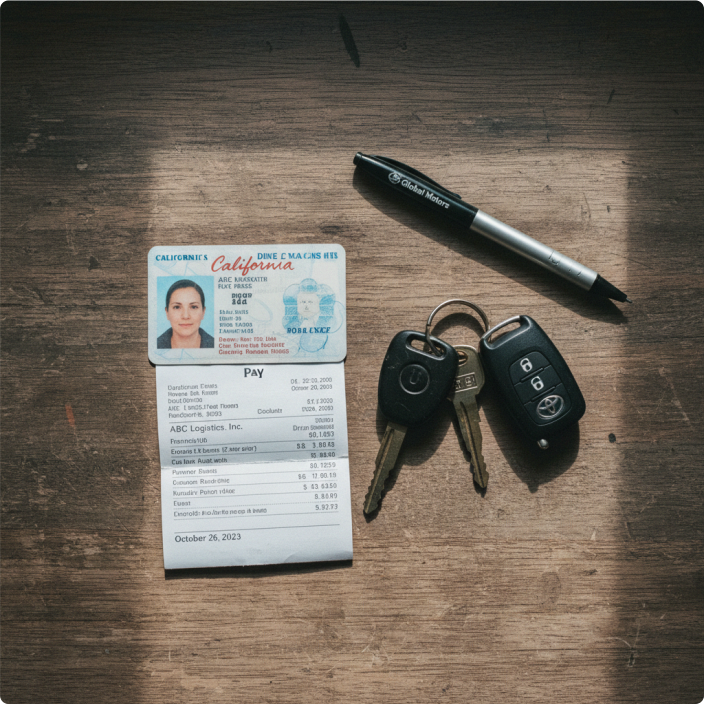
To secure a loan in Manitoba, you typically need to provide the following:
- Valid Driver’s License: Must be valid in Manitoba.
- Proof of Income: Two recent pay stubs or 3 months of bank statements.
- Proof of Residence: A utility bill or lease agreement matching your ID address.
- Void Cheque: For setting up pre-authorized payments.
For a detailed archive of necessary paperwork, refer to What documents needed to buy used
car Manitoba Archives.
Specific Requirements for ‘No Credit’ Used Car Loans
If you have no credit, lenders will weigh your employment history heavily. Expect to provide a
Letter of Employment and possibly references who can vouch for your stability. A larger
down payment is often required to secure approval in these scenarios.
Step 5: Selecting the Right Vehicle and
Navigating Regulations
Once financing is secured, the fun part begins: choosing your car. However, Manitoba has
strict regulations to protect buyers.
The Importance of a Valid Certificate of Inspection (COI)
In Manitoba, a used vehicle cannot be registered without a valid Certificate of Inspection
(COI). This safety check ensures the brakes, suspension, and tires meet provincial standards.
When browsing High Quality Used Cars for Sale, always verify the status of the COI.
Navigating Manitoba Regulations and The Consumer
Protection Act
Dealers must disclose specific information about the vehicle’s history. This is mandated by the
government to prevent fraud. For a comprehensive look at what to watch out for, read The
Ultimate Canadian Used Car Buyer’s Checklist: Navigating Manitoba Regulations.
Additionally, the government provides Important Tips on Buying a Vehicle regarding required
disclosures, such as past collision damage or if the car was previously a rental.
Why You Must Perform a Lien Check Before Private
Financing
If you are buying privately and getting a bank loan, you must perform a lien check. If the
previous owner owes money on the car, the debt stays with the vehicle. If they stop paying,
the lender can repossess your new car.
Expert Analysis: The MPI Integration Gap
A common point of confusion for Manitoba buyers is the relationship between their financing
and Manitoba Public Insurance (MPI).
How Financing Affects Your Manitoba Public Insurance
(MPI) Registration
MPI is the insurance provider, not the lender. However, when you register the vehicle, you
must present the Bill of Sale. If you have financed the vehicle, the lender will register a lien
against it in the Personal Property Registry. MPI does not enforce loan payments, but you
cannot transfer the title to someone else later without clearing that lien.
Completing the Transfer of Ownership Document (TOD)
with a Lien
The Transfer of Ownership Document (TOD) is on the back of the vehicle registration card.
Both the buyer and seller must sign this. Ensure the date on the TOD matches your Bill of Sale
and financing agreement to avoid administrative headaches at the Autopac counter.
Conclusion: Taking the Next Step Toward
Your Vehicle
Navigating used car financing in Manitoba does not have to be stressful. By analyzing your
budget, checking your credit, and understanding the documentation required, you can walk
onto the lot with confidence.
Booking a Test Drive in Winnipeg
Now that you are armed with financial knowledge, it is time to get behind the wheel. The feel
of the car is just as important as the numbers on the contract. We recommend that you Test
Drive a Vehicle in Winnipeg to ensure it handles our unique road conditions to your
satisfaction.
Frequently Asked Questions About Manitoba Car Loans
- Q: Can I get a car loan while on Employment Insurance (EI)?*
A: It is difficult but possible with specialized subprime lenders who consider the temporary nature of EI.
- Q: How long is a COI valid for?*
A: A Certificate of Inspection is valid for one year from the date of inspection.
- Q: Does checking my own credit hurt my score?*
A: No. Checking your own score is a “soft inquiry” and has no impact. Applying for a loan
results in a “hard inquiry,” which can temporarily lower your score.