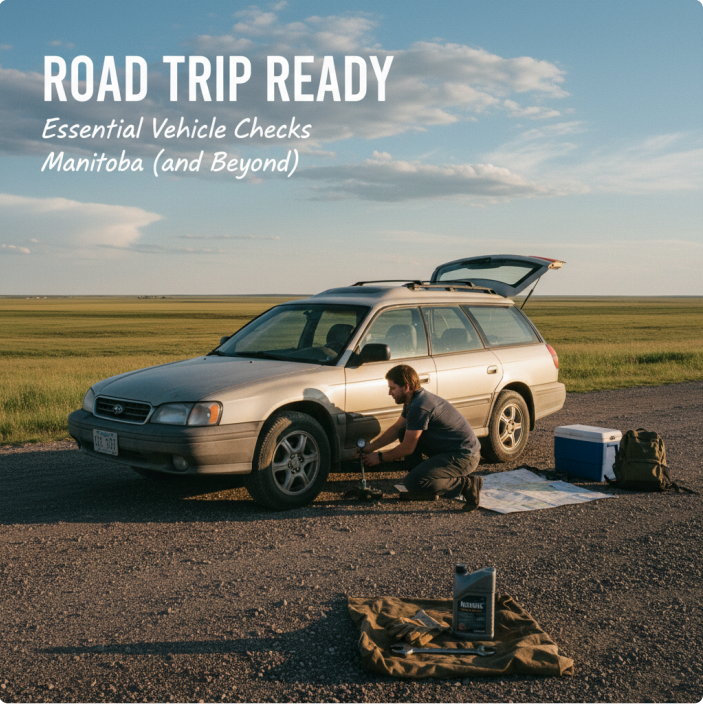
Preparing your vehicle for a road trip requires a systematic inspection of tires, vital fluids,
braking systems, and visibility components to ensure safety and prevent costly breakdowns. Whether you are navigating the gravel backroads of the Interlake or cruising the
Trans-Canada Highway, a proactive pre-trip checkup is the single most effective way to secure
a seamless journey.
From the Whiteshell to the Rockies, Safety
Starts Here
Manitoba offers stunning landscapes, from the dense forests of the Whiteshell to the rolling
prairies heading toward the Rockies. However, the vast distances between service stations in
our province mean that reliability is not optional, it is a necessity.
A mechanical failure on the Perimeter Highway is an inconvenience; a breakdown halfway to
Flin Flon is a safety hazard. By dedicating time to a thorough inspection before you leave, you
protect your passengers and your wallet.
The Essential Pre-Road Trip Checklist: What
to Check Before You Drive
Before you pack your luggage, you need to “pack” confidence in your vehicle. A proper
inspection covers the three main areas of vehicle health: mechanical performance, safety
systems, and visibility. While some of these can be performed in your driveway, others may
require professional diagnostic tools.
Quick Reference Table: Fluids, Tires, and Lights
Use this quick reference guide to assess the critical components of your vehicle.
| Component | What to Check | Acceptable Condition | Action Required If Failed |
| Engine Oil | Level and Color | Amber color, near “Full” mark on dipstick | Top up or schedule an oil change |
| Coolant | Level in Reservoir | Between Min/Max lines; clear color | Refill (DO NOT open when hot) |
| Tires | Pressure & Tread | 32-35 PSI (check door jamb); 4/32″ tread | Inflate or replace tires |
| Brake Fluid | Level | Near “Max” line; translucent yellow | Inspect for leaks immediately |
| Lights | Functionality | Headlights, brake lights, signals working | Replace bulbs or fuses |
| Wipers | Rubber Blade | Smooth edge, flexible rubber | Replace blades |
Key Takeaways: 5 Critical Maintenance
Steps for Manitoba Drivers
- Hydrate Your Car: Ensure all fluid reservoirs are topped off to prevent overheating and
mechanical friction. - Pressure Check: Correct tire pressure improves fuel economy and handling on highway
curves. - Vision Clearance: Fresh wiper blades are essential for Manitoba’s bug-heavy summers
and sudden storms. - Battery Load: A weak battery can survive city driving but fail during long stretches of
accessory use (AC/GPS). - Brake Inspection: Ensure pads and rotors are thick enough to handle emergency stops
at highway speeds.
Tire Health: Your First Line of Defense
Your tires are the only contact point between your vehicle and the road. In Manitoba, where
road conditions fluctuate drastically, tire health is paramount. For a comprehensive
assessment, consider visiting Winnipeg, MB Vehicle Service & Repair – Hiru Auto to
ensure your rubber is ready for the road.
Checking Tread Depth and Air Pressure
Low tread depth leads to hydroplaning during summer thunderstorms. Use a tread depth
gauge or the “Toonie Test” (if the tread covers the gold rim, you are generally safe).
Equally important is air pressure. Under-inflated tires generate excessive heat, which is the
leading cause of highway blowouts. Check your pressure when the tires are cold for the most
accurate reading.
Adjusting for Manitoba Gravel Roads vs. Trans-Canada
Highway
Driving to a cottage often involves gravel. Sharp rocks can puncture worn tires easily. If your
trip involves significant gravel travel, ensure your tires have reinforced sidewalls or sufficient
tread depth to resist stone drilling. Conversely, the Trans-Canada Highway requires tires
balanced for high-speed heat dissipation.
The Spare Tire: The Most Overlooked Inspection Item
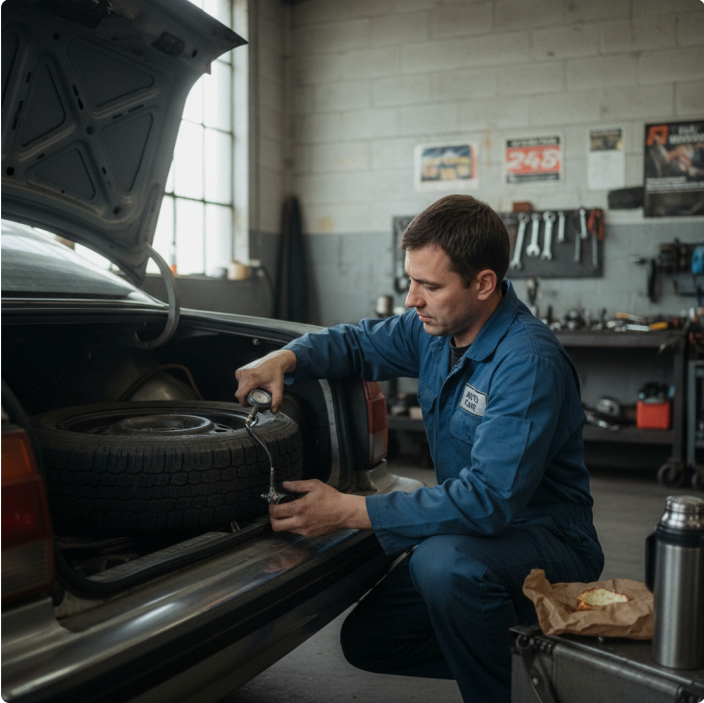
There is nothing worse than getting a flat tire only to discover your spare is also flat. Drop the
spare tire, check its pressure, and inspect it for dry rot. Ensure your jack and lug wrench are
present and free of rust.
Under the Hood: Fluids, Filters, and Belts
A look under the hood can reveal issues before they become disasters. You are looking for
leaks, frayed belts, or low fluid levels.
Engine Oil and Coolant: Preventing Overheating on Long
Drives
Long-distance driving puts a sustained load on your engine. Old oil loses its viscosity and
cannot protect engine components effectively.
Coolant is equally vital. Manitoba summers can get hot, and a cooling system failure will leave
you stranded on the side of the road with steam pouring from your hood. Ensure your
coolant mixture is correct to prevent boiling over.
Windshield Washer Fluid: The Manitoba Bug and Dust
Defense
In the prairies, running out of washer fluid is a safety hazard. Between highway dust and the
inevitable swarms of insects, your windshield can become opaque in minutes. Carry an extra
jug of bug-removing washer fluid in your trunk.
Transmission and Brake Fluid Levels
Transmission fluid should be bright red (usually) and smell sweet. If it smells burnt, your
transmission may be struggling. Brake fluid is hygroscopic, meaning it absorbs moisture over
time. If it looks dark or murky, it lowers the boiling point of the fluid, which can lead to brake
fade in mountainous terrain like the Rockies.
Visibility and Electrical Systems
Seeing and being seen are the pillars of highway safety.
Wiper Blades: Inspecting for Streaks and Tears
If your wipers chatter across the glass or leave untreated streaks, replace them immediately.
Sun exposure makes the rubber brittle. You do not want to discover your wipers are
ineffective during a torrential downpour near Brandon.
Decoding Your Dashboard: Addressing Warning Lights
Before Departure
Never ignore a dashboard light before a long trip. A yellow “Check Engine” light might seem
minor, but it could indicate a sensor failure that will cripple your fuel economy.
For a deeper understanding of what your car is trying to tell you, read Decoding Your
Dashboard A Winnipeg Drivers Guide To Common Warning Lights And What They
Mean.
Battery Health: Testing Voltage for Remote Area
Reliability
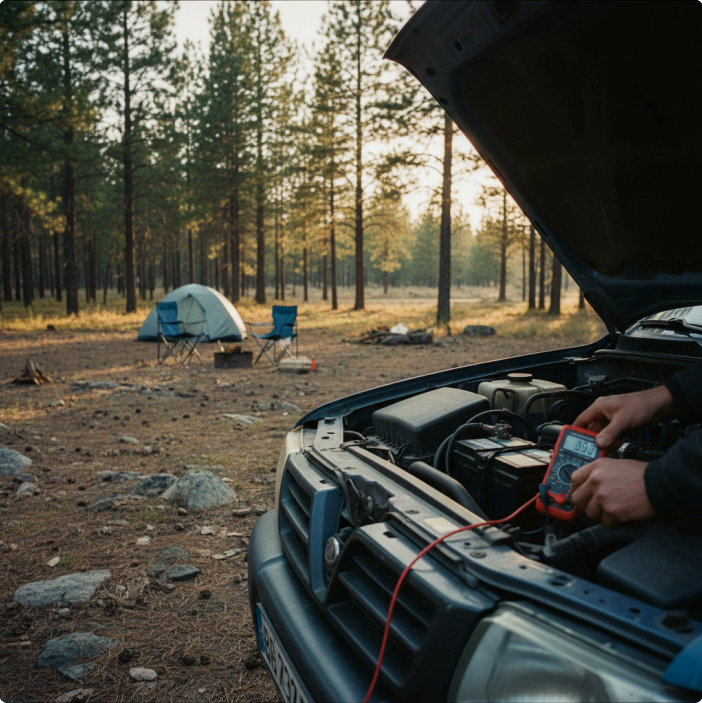
Batteries typically last 3 to 5 years. If yours is older, have it load-tested. A battery might start
the car fine in your garage, but after sitting at a campsite for two days charging phones and
running lights, it might not have the cranking amps to start the engine.
Suspension and Undercarriage: Surviving
Potholes and Bumps
Manitoba is known for potholes. Your suspension absorbs these impacts, keeping your tires
on the road.
Identifying Worn Shocks and Struts
If your car continues to bounce after hitting a bump, or if the nose dives significantly when
you brake, your shocks or struts may be worn. This affects stopping distance and handling.
What a Manitoba Safety Inspection Covers for Used Cars
If you recently bought a vehicle for your travels, it likely underwent a safety inspection. This
process ensures the structural integrity of the suspension and frame. To understand exactly
what is examined during these checks, review the Manitoba Safety Inspection Checklist.
Expert Analysis: DIY vs. Professional Vehicle
Inspections
While checking tire pressure and fluids is great for DIYers, some components require a trained
eye.
When to Visit Hiru Auto for a Professional Service
Brakes, suspension components, and complex electrical diagnostics are best left to
professionals. A hoist allows mechanics to see inner tire wear, rusted brake lines, and leaking
seals that are invisible from the driveway.
For a detailed breakdown of professional standards, look at The Ultimate Checklist What A
Manitoba Safety Inspection Covers For Your Used Car.
Data Breakdown: Fuel Efficiency Losses from Poor
Maintenance
Skipping maintenance doesn’t just risk a breakdown; it costs you money at the pump.
- Under-inflated tires: reduce mileage by up to 3%.
- Dirty air filters: can reduce acceleration and efficiency by up to 10%.
- Old spark plugs: can decrease fuel economy by up to 30%.
For more ways to stretch your gas dollar, check out our guide on Winnipeg Fuel Efficiency
Tips Save Gas In Winter Summer.
Manitoba-Specific Road Trip Prep
Our province presents unique challenges that generic guides often miss.
Shoulder Season Strategies: Preparing for Unpredictable
Spring/Fall Weather
Traveling in May or September? You might encounter a heatwave or a blizzard. Ensure your
tires are appropriate for the weather (don’t switch to summers too early). For tips on handling
the transition from winter, read about Spring Vehicle Maintenance In Manitoba.
The Emergency Kit: Essentials for Remote Highway Travel
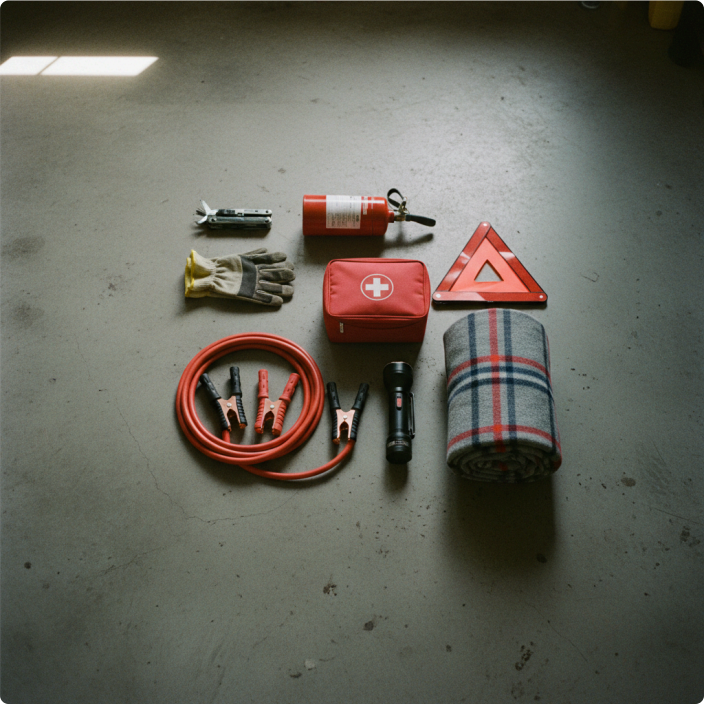
When driving through remote areas like the Interlake or Northern Manitoba, cell service is not
guaranteed. Your kit should include:
- Jumper cables
- First aid kit
- Flashlight with extra batteries
- Non-perishable food and water
- Thermal blanket
For a complete list of travel safety essentials, CAA offers excellent Road trip travel tips.
Schedule Your Checkup and Drive with
Confidence
A road trip should be about the playlist, the snacks, and the destination—not about worrying
if your car will make it. By performing these essential checks, you ensure that your vehicle is
as ready for the adventure as you are.
If your current vehicle isn’t up to the task of a cross-province trek, it might be time for an
upgrade. Check out our Inventory to find a reliable vehicle for your next journey. Stay safe
and enjoy the drive!